
Life cycle
A colony contains reproductives, workers, and soldiers. Winged reproductives emerge during favorable conditions, pair, and attempt to begin new colonies.
Reticulitermes species
Subterranean termites are organized, moisture dependent insects that can move between soil and concealed wood without exposing their main colony.
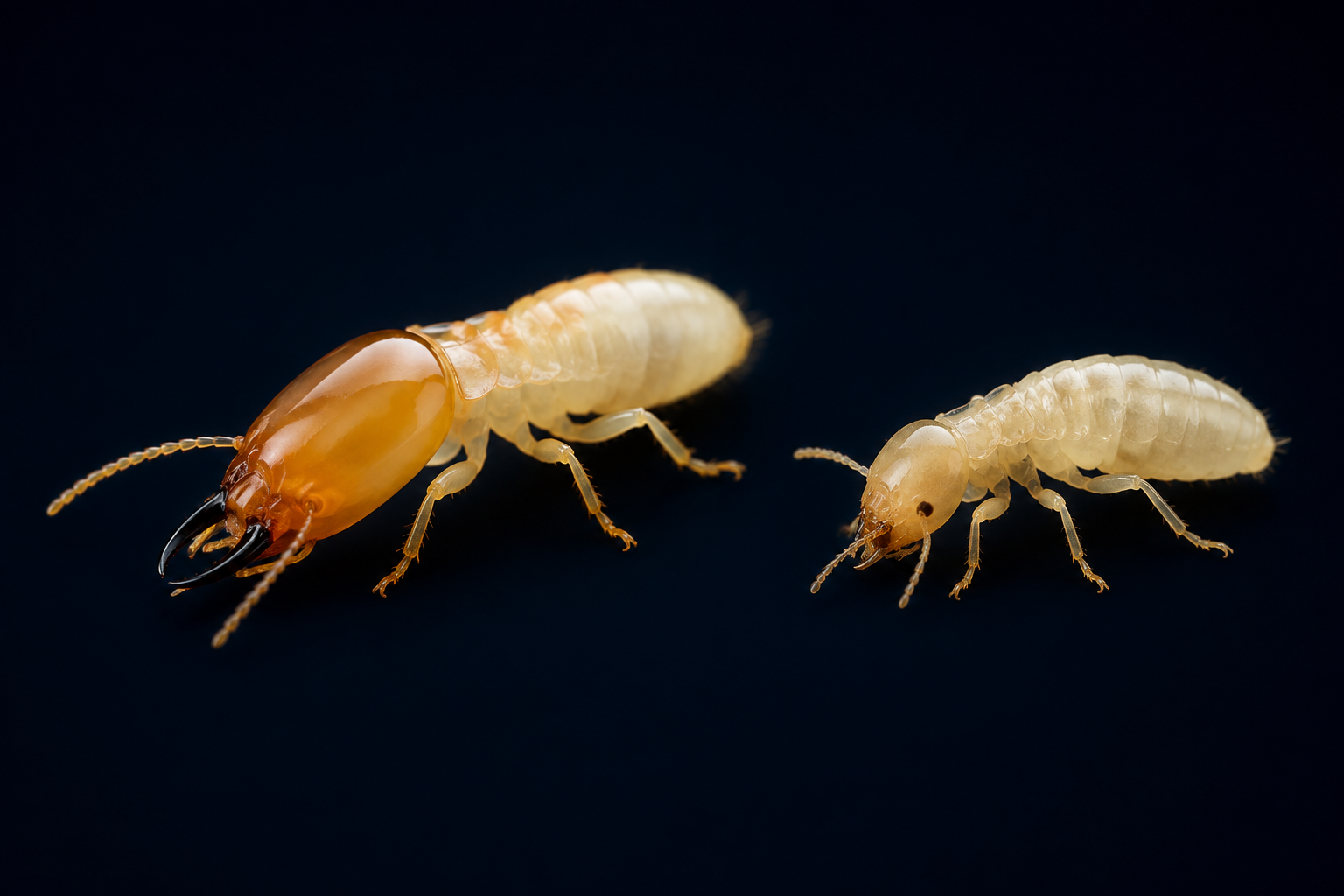
Soldiers use specialized mandibles to defend colony galleries.
A colony contains reproductives, workers, and soldiers. Winged reproductives emerge during favorable conditions, pair, and attempt to begin new colonies.
Workers digest cellulose found in wood and other plant material. They share food throughout the colony and do most of the damaging work.
Native subterranean termites usually maintain a connection to soil and build protected mud tubes across exposed surfaces to conserve moisture.
Oklahoma State University reports termite pressure across the state, with heavier pressure generally toward the southeast. Structure, soil, drainage, and wood contact all affect property specific risk.
Termites can damage structural and finish wood while remaining concealed. Evidence deserves careful identification, documentation, and a property specific plan.
The insects you see may represent a small part of a colony. Soil access, hidden construction joints, moisture, and inaccessible voids complicate control.
Map evidence, access points, moisture, food, shelter, and construction details.
Confirm whether the evidence and organism are consistent with termites.
Address food, water, shelter, entry, and habitat factors where practical.
Select mechanical, exclusion, monitoring, and product tools suited to the exact conditions.
Measure activity, adjust the plan, and reinforce prevention when the evidence calls for it.
Treatment decisions depend on the pest, activity level, property, environmental conditions, label directions, and other site specific factors. No pesticide is described as harmless, risk free, or universally appropriate.
The objective is not more product. The objective is the correct strategy, in the correct place, at the correct time.
Pristine Pest Control can evaluate the evidence and build the right solution for your property.