Life cycle
Ants develop through egg, larva, pupa, and adult stages. Queens produce the colony, workers forage and maintain it, and seasonal winged forms establish new colonies.
Formicidae
Ant activity is rarely random. A trail is evidence of a working system connecting food, moisture, shelter, and a colony that may be out of view.
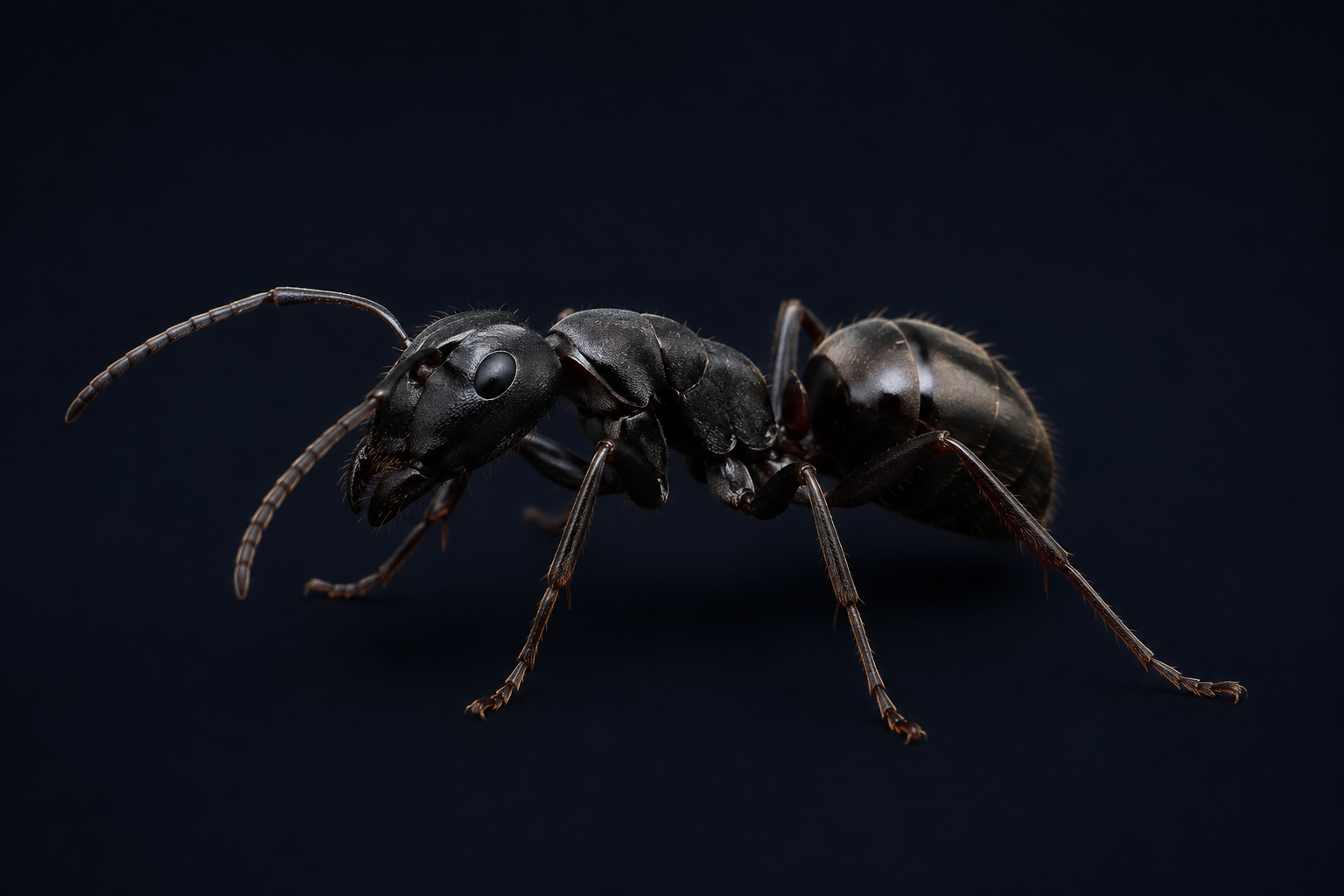
Elbowed antennae help ants read chemical trails and navigate colony life.
Ants develop through egg, larva, pupa, and adult stages. Queens produce the colony, workers forage and maintain it, and seasonal winged forms establish new colonies.
Preferences vary by species and can shift through the season. Sugars, proteins, fats, pet food, and other insects may all support activity.
Colonies may occupy soil, landscape material, wall voids, damaged wood, or protected spaces close to moisture. Species identification changes the control strategy.
Warm periods expand foraging activity. Rain, heat, and drying soil can move visible trails toward structures, while protected indoor sites can support activity beyond the outdoor season.
Most household ants are a nuisance, but some contaminate food or indicate moisture and damaged wood conditions that deserve inspection.
Treating visible workers can leave the reproductive colony untouched. Repellent applications may also redirect trails or fragment certain colonies.
Map evidence, access points, moisture, food, shelter, and construction details.
Confirm whether the evidence and organism are consistent with ants.
Address food, water, shelter, entry, and habitat factors where practical.
Select mechanical, exclusion, monitoring, and product tools suited to the exact conditions.
Measure activity, adjust the plan, and reinforce prevention when the evidence calls for it.
Treatment decisions depend on the pest, activity level, property, environmental conditions, label directions, and other site specific factors. No pesticide is described as harmless, risk free, or universally appropriate.
The objective is not more product. The objective is the correct strategy, in the correct place, at the correct time.
Pristine Pest Control can evaluate the evidence and build the right solution for your property.