
Life cycle
Mice mature quickly and can reproduce under favorable indoor conditions throughout the year. Population growth depends heavily on food, shelter, and disturbance.
Mus musculus
House mice are agile, adaptable rodents that can turn a small structural opening into reliable access to warmth, food, and nesting material.
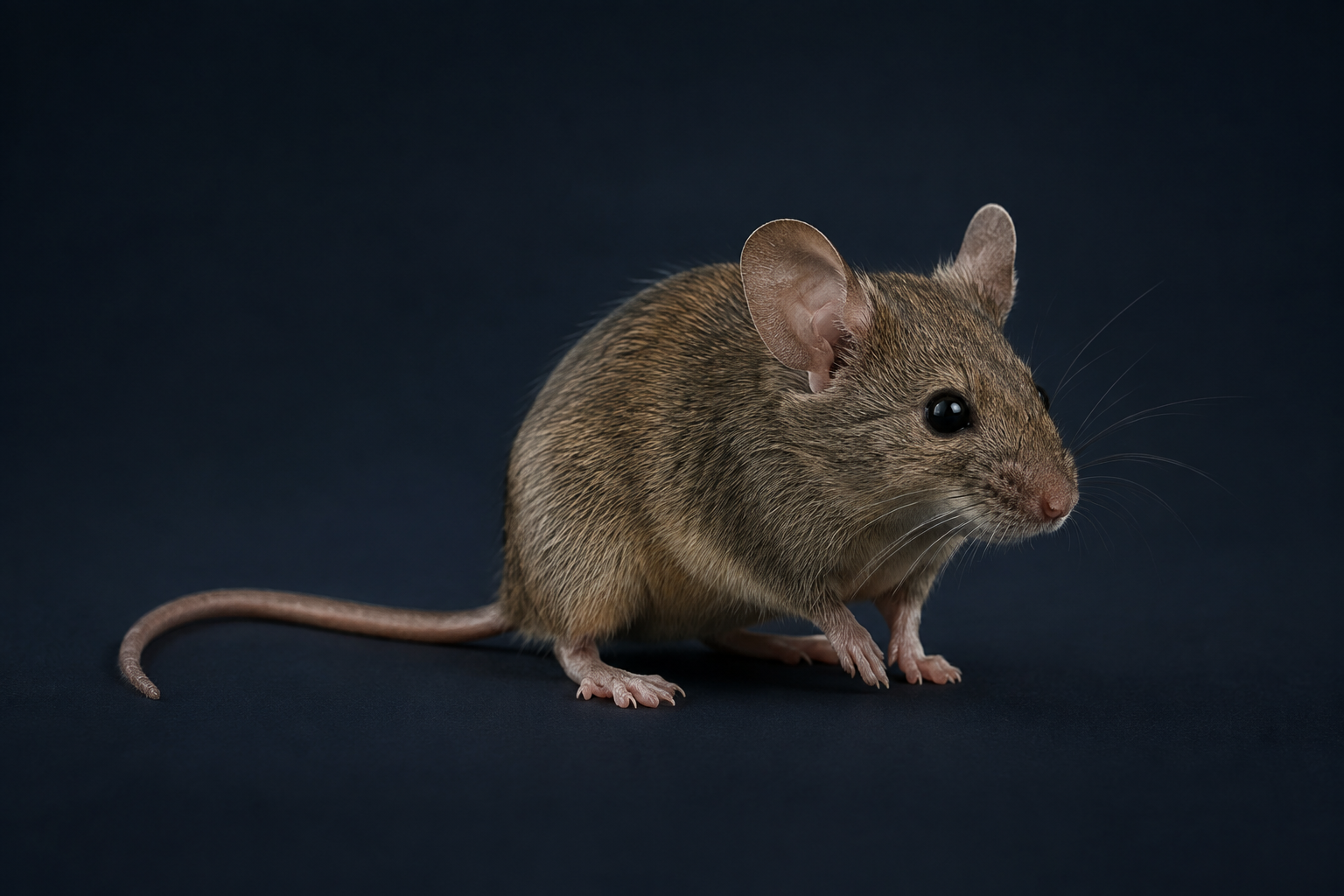
Continuously growing incisors drive frequent gnawing behavior.
Mice mature quickly and can reproduce under favorable indoor conditions throughout the year. Population growth depends heavily on food, shelter, and disturbance.
They sample many foods but often prefer grains and seeds. Small, dependable food sources can sustain activity.
Mice nest in protected voids, storage, insulation, cabinets, and equipment areas, usually close to food and established travel routes.
Temperature swings, harvest activity, and changing outdoor food or shelter can influence movement toward structures. Indoor conditions can sustain activity in every season.
Rodents can contaminate food and surfaces, damage stored material, and gnaw wiring or building components.
Mice use small openings, learn travel routes, and exploit food that is easy to miss. Removal without exclusion leaves the access problem in place.
Map evidence, access points, moisture, food, shelter, and construction details.
Confirm whether the evidence and organism are consistent with mice.
Address food, water, shelter, entry, and habitat factors where practical.
Select mechanical, exclusion, monitoring, and product tools suited to the exact conditions.
Measure activity, adjust the plan, and reinforce prevention when the evidence calls for it.
Treatment decisions depend on the pest, activity level, property, environmental conditions, label directions, and other site specific factors. No pesticide is described as harmless, risk free, or universally appropriate.
The objective is not more product. The objective is the correct strategy, in the correct place, at the correct time.
Pristine Pest Control can evaluate the evidence and build the right solution for your property.