
Life cycle
Mosquitoes develop through egg, larva, pupa, and adult stages. The aquatic stages require water, sometimes in containers small enough to overlook.
Culicidae
Mosquito pressure is shaped by water, weather, vegetation, species behavior, and activity on neighboring properties.
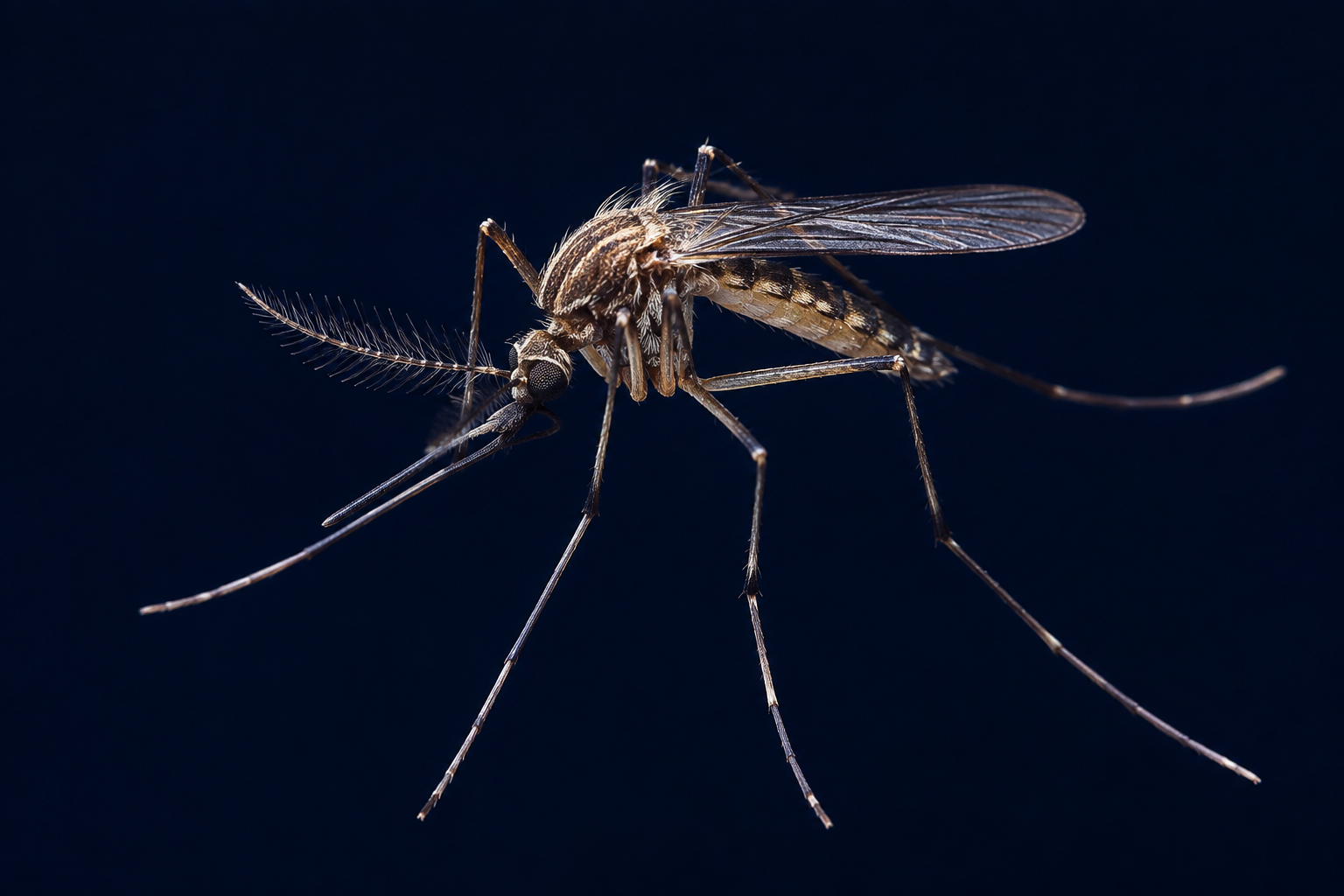
The elongated mouthparts are adapted for fluid feeding.
Mosquitoes develop through egg, larva, pupa, and adult stages. The aquatic stages require water, sometimes in containers small enough to overlook.
Adults use plant sugars. Females of many species also take blood meals to support egg development.
Larvae occupy standing water. Adults rest in shaded, humid vegetation and protected structures between periods of activity.
Warm temperatures and rainfall can accelerate development. Irrigation, clogged gutters, containers, and dense shade can maintain local pressure after weather changes.
Mosquitoes are biting pests and some species can transmit pathogens. Local public health guidance should inform any disease specific concern.
Breeding sites can be numerous, temporary, and distributed beyond one property. Adult treatments alone do not address developing larvae.
Map evidence, access points, moisture, food, shelter, and construction details.
Confirm whether the evidence and organism are consistent with mosquitoes.
Address food, water, shelter, entry, and habitat factors where practical.
Select mechanical, exclusion, monitoring, and product tools suited to the exact conditions.
Measure activity, adjust the plan, and reinforce prevention when the evidence calls for it.
Treatment decisions depend on the pest, activity level, property, environmental conditions, label directions, and other site specific factors. No pesticide is described as harmless, risk free, or universally appropriate.
The objective is not more product. The objective is the correct strategy, in the correct place, at the correct time.
Pristine Pest Control can evaluate the evidence and build the right solution for your property.