
Life cycle
Spiders hatch from egg sacs and mature through repeated molts. Most live independently and place webs or retreats where prey movement is likely.
Araneae
Spiders usually appear where shelter and prey are available. Correct identification matters because behavior and risk vary widely among species.
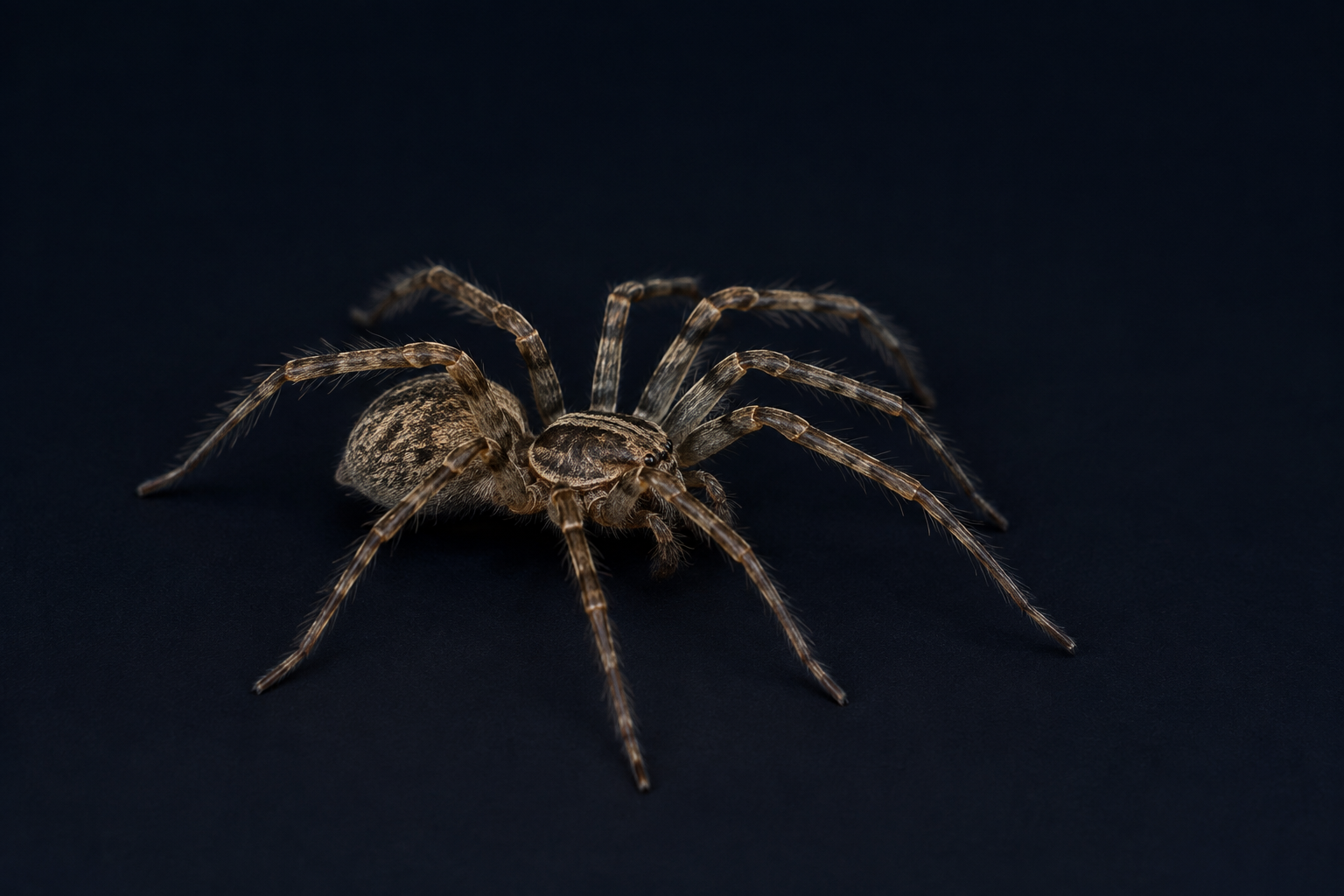
Eye arrangement is one clue specialists use to narrow spider families.
Spiders hatch from egg sacs and mature through repeated molts. Most live independently and place webs or retreats where prey movement is likely.
They are predators of insects and other small arthropods. Reducing the prey base is often part of reducing spider pressure.
Web builders favor undisturbed corners and structural edges. Hunting spiders use cracks, storage, ground cover, and other protected routes.
Seasonal insect activity can increase spiders near exterior lighting, doors, eaves, vegetation, garages, and storage areas.
Most spiders avoid people and help control insects. A small number of medically significant species make careful identification important when concern is justified.
Spiders can occupy hidden voids and reinvade when exterior prey remains abundant. Web removal alone does not change the conditions attracting them.
Map evidence, access points, moisture, food, shelter, and construction details.
Confirm whether the evidence and organism are consistent with spiders.
Address food, water, shelter, entry, and habitat factors where practical.
Select mechanical, exclusion, monitoring, and product tools suited to the exact conditions.
Measure activity, adjust the plan, and reinforce prevention when the evidence calls for it.
Treatment decisions depend on the pest, activity level, property, environmental conditions, label directions, and other site specific factors. No pesticide is described as harmless, risk free, or universally appropriate.
The objective is not more product. The objective is the correct strategy, in the correct place, at the correct time.
Pristine Pest Control can evaluate the evidence and build the right solution for your property.